Our translator friend just finished working on the latest issue of our magazine: this is the link for the download.
- Editorial [Page 2]
- Communique of the Mater Boni Consilii Institute: Imprudent Announcements [Page 4]
- The “Profession of Faith” that the SSPX sent to Prevost and the Cardinals on the 24th of June is the profession of faith of the Society, and not of Tradition [Page 6]
- The way we sit [Page 11]
- Notices [Page 38]
…And this is the page where you can find the translation of other issues of our magazine (you will just have to click on the covers to download the related issue).
Sodalitium No. 77: Editorial
Issue No. 77 of Sodalitium was already in preparation—featuring numerous studies, articles, and reviews, and paying special attention to the grave threat facing the Christian presence in the Holy Land and the Near East—when we found it necessary to publish, as soon as possible, two short documents regarding current events in the Church and the so-called traditionalist world, alongside a substantial study by Fr Coradello on sacramental confession. We therefore decided to postpone the “regular” issue of the magazine—which will now become No. 78—until after the summer, and to publish this “special” issue first.
With regard to current events, we are publishing a brief statement from our Institute concerning two “imprudent announcements” involving the Church and the “traditionalist” world: the announcement of new episcopal consecrations within the Society of Saint Pius X scheduled for July 1, 2026, and a brief analysis of the “Profession of Faith” issued by that same Society on June 24 (a somewhat anomalous act in itself, given that Professions of Faith are generally drafted by the Church so that the faithful and religious institutes may adhere to them). The other announcement under consideration—which we hope remains merely in the realm of ideas—is the proposed convocation of an “imperfect general Council” by certain “conclavist” bishops with a view to electing an (anti) pope. The Institute’s position—whether regarding una cum consecrations or bizarre conclaves—is well known, yet it is well worth recalling and restating it.
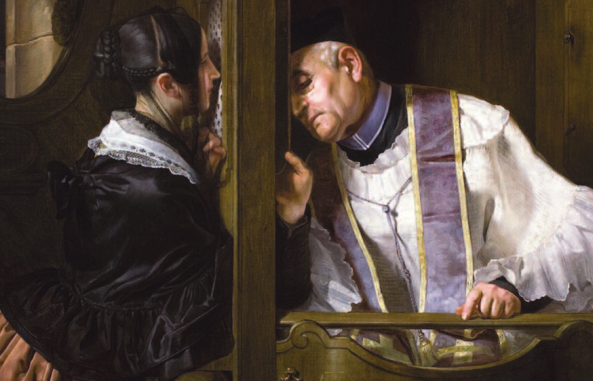
A study focusing on a specific aspect of the Sacrament of Penance became increasingly timely as time went on. In fact, following Vatican II and the liturgical reform, Catholics loyal to Tradition and resistant to modernism often reacted spontaneously, so to speak, by simply continuing to “do as before.” Attention was focused primarily on the new rite of the Mass; meanwhile, with regard to the sacraments—and especially the one that, alongside the Eucharist, constantly accompanies the life of the faithful: namely ‘confession’—priests at first continued to exercise the powers they had possessed prior to the Council. Only gradually did some find themselves facing difficulties due to their adherence to sound doctrine, while others, newly ordained without litterae dimissoriae (dimissory letters), appeared to lack the requisite faculties. Indeed, there are two sacraments that require proper faculties in order to be administered validly (and not merely licitly): Matrimony and Penance. Regarding Matrimony, however, the Church—by way of the Code of Canon Law—had made sufficient provision for exceptional cases in which a marriage would be valid even without the canonical form. On the other hand, in the case of Penance, the stipulated instances of exception (common error, danger of death, etc.) were insufficient to cover all the situations arising in ordinary ministry, unless the cases foreseen by law were interpreted in an extremely broad manner. This difficulty (which affected all “traditionalist” priests indiscriminately—except for those who, following the establishment of the Ecclesia Dei commission, accepted Vatican II and had thus been “regularized;” and even except the “Lefebvrians” themselves after the “Holy Year,” by the gracious concession of “Pope Bergoglio”! (Will the privilege last after the new “excommunication”?). Consequently, it became necessary to examine the principles in determining the validity and lawfulness of confessions administered within “Tradition.” This sparked the debate, which was further fueled by the need to address an argument put forward by Fr Tranquillo (a priest who has since left the Society for undisclosed reasons) criticizing those not in communion with Bergoglio in which he contended that the jurisdiction required to hear confessions could only be derived from Bergoglio himself.
Father Guérard des Lauriers, O.P., had developed his own theological reflection on this delicate issue—an issue capable of troubling the consciences of many of the faithful—having, as was his custom, studied this aspect of our Faith in depth. Sodalitium has taken the Dominican theologian’s observations as a starting point to present to the public—and to priests in particular—an in-depth study of the Power of the Keys received through priestly ordination itself. We hope thereby to make a valuable contribution to sacramental theology, transcending the specific circumstances that may have sparked interest in the matter.